VDSL vs DSL Internet in Dubai & UAE: Which Connection Is Right for Your Business?
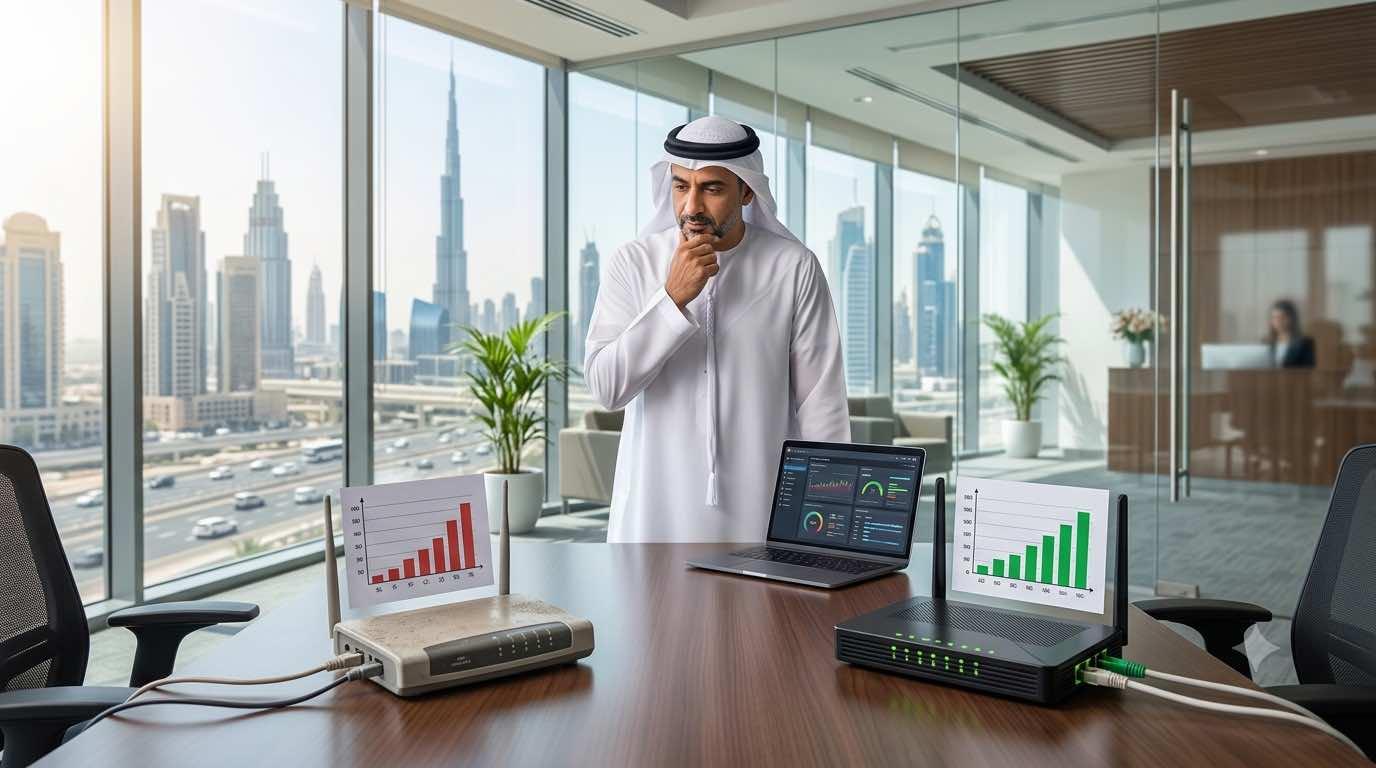
For businesses and residents across Dubai, Abu Dhabi, Sharjah, Ajman, and the wider UAE, choosing the right internet connection is critical. Acronyms like DSL and VDSL are often a source of confusion — are they the same technology, or do they represent fundamentally different solutions? As internet usage in the UAE continues to surge — with the country boasting one of the highest internet penetration rates in the world at over 99% — understanding your connectivity options has never been more important. In this guide, Arcnet UAE unpacks the differences between VDSL and DSL to help UAE businesses and homeowners make an informed decision.
What is DSL? Internet Connectivity Explained for UAE Users
DSL, or Digital Subscriber Line, is a technology that delivers internet access through existing copper telephone lines. It operates by using different frequencies on the telephone line to separate voice communication from data transmission — meaning UAE households and businesses can use the internet and their landline phone simultaneously. DSL has been widely deployed across the Emirates, particularly in older residential and commercial buildings in areas like Deira, Sharjah’s Rolla area, and Abu Dhabi’s older districts where fiber infrastructure is still being rolled out.
Key characteristics of DSL for UAE users:
- Speed: DSL typically delivers faster speeds than traditional dial-up but slower than newer broadband technologies like fiber optics — which Etisalat (e&) and du are actively expanding across the UAE.
- Distance Limitations: DSL performance degrades the further you are from the telephone exchange or DSLAM (Digital Subscriber Line Access Multiplexer) — a key consideration for businesses in Dubai’s peripheral industrial zones or remote areas in the Northern Emirates.
- Variants: Multiple DSL variants exist, including Asymmetric DSL (ADSL) and Symmetric DSL (SDSL). ADSL is the most commonly deployed variant for residential internet access across UAE homes and small offices.
What is VDSL? The Faster Internet Option for Dubai & UAE Businesses
VDSL, or Very High Bit Rate Digital Subscriber Line, is an advanced and significantly faster evolution of DSL. For businesses in Dubai’s fast-paced commercial districts — such as Business Bay, DIFC, Dubai Silicon Oasis, and Abu Dhabi’s ADGM — VDSL offers a powerful connectivity upgrade where full fiber rollout has yet to be completed. According to the International Telecommunication Union (ITU), VDSL2 can deliver theoretical downstream speeds of up to 100 Mbps, making it a compelling option for data-intensive UAE business operations.
Key characteristics of VDSL for UAE users:
- Speed: VDSL provides significantly faster internet speeds than traditional DSL, making it well-suited for high-bandwidth applications like video conferencing, cloud computing, 4K streaming, and online collaboration — all critical for modern UAE businesses and remote workers.
- Shorter Distance Requirement: VDSL operates effectively over shorter distances from the DSLAM, making it particularly well-suited for densely populated urban areas across Dubai, Sharjah, and Abu Dhabi city centres, where telephone infrastructure is robust and exchanges are close.
- VDSL vs VDSL2: VDSL offers symmetrical upload and download speeds, while VDSL2 — the more widely deployed version across UAE networks — provides faster download speeds with asymmetrical upload speeds, ideal for most business and residential use cases.
VDSL vs DSL: Key Differences at a Glance for UAE Businesses
| Feature | DSL (ADSL) | VDSL / VDSL2 |
| Speed | Up to 24 Mbps download | Up to 100 Mbps download (VDSL2) |
| Upload Speed | Lower (asymmetric) | Higher; VDSL offers symmetrical |
| Distance from Exchange | Up to 5.5 km | Up to 1.5 km (optimal performance) |
| Best For | Basic browsing, email, SME offices in older UAE districts | Streaming, cloud computing, large Dubai business offices |
| Infrastructure Needed | Existing copper telephone lines | Upgraded DSLAM closer to premises |
| Typical UAE Deployment | Older residential areas, Northern Emirates | Urban Dubai, Abu Dhabi, Sharjah city centres |
| Cost | Generally lower | Moderate; less than full fiber |
DSL and VDSL Internet Connectivity Across the UAE: Dubai, Abu Dhabi & Sharjah
The UAE’s telecommunications landscape is dominated by two major providers: Etisalat (e&) and du (EITC). Both providers have been aggressively expanding fiber-optic infrastructure across Dubai, Abu Dhabi, and Sharjah. However, DSL and VDSL connections remain relevant — particularly for businesses in older commercial buildings, industrial areas in Sharjah, Ajman’s free zones, and certain locations in Ras Al Khaimah and Fujairah where fiber has not yet reached. The UAE Telecommunications and Digital Government Regulatory Authority (TDRA) oversees all internet service quality standards across the country, ensuring UAE consumers receive consistent and competitive broadband services regardless of connection type.
Which Internet Solution Is Right for Your UAE Business or Home?
Choosing between DSL and VDSL — or upgrading to full fiber — depends on your location within the UAE, your usage requirements, and your budget. Here’s a quick guide:
- Choose DSL if: You’re a small business or home user in an older building in Deira, Bur Dubai, Sharjah’s Al Nahda, or a residential area in Abu Dhabi where VDSL or fiber isn’t yet available, and your internet needs are primarily email, basic browsing, and light cloud usage.
- Choose VDSL if: You’re a growing SME in a Dubai free zone, a media company in Dubai Media City, or a business in Abu Dhabi’s Khalidiyah district needing faster speeds for video calls, cloud applications, and data uploads without full fiber availability.
- Upgrade to Fiber if: You’re in a modern commercial tower in Downtown Dubai, DIFC, Business Bay, or Abu Dhabi’s Al Reem Island, where fiber-optic internet delivers the ultimate in speed, reliability, and scalability for demanding business operations.
Arcnet UAE: Your Trusted Internet & Networking Solutions Partner in Dubai and the UAE
At Arcnet UAE, we help businesses across Dubai, Abu Dhabi, Sharjah, Ajman, Ras Al Khaimah, and Fujairah navigate their connectivity options and implement the right networking infrastructure. Whether you need DSL, VDSL, fiber internet, or a complete structured cabling solution for your UAE office or facility, our expert team delivers reliable, scalable, and cost-effective solutions aligned with TIA/EIA cabling standards and UAE regulatory requirements. Contact Arcnet UAE today for a free network assessment and discover the best internet solution for your Dubai or UAE business.